
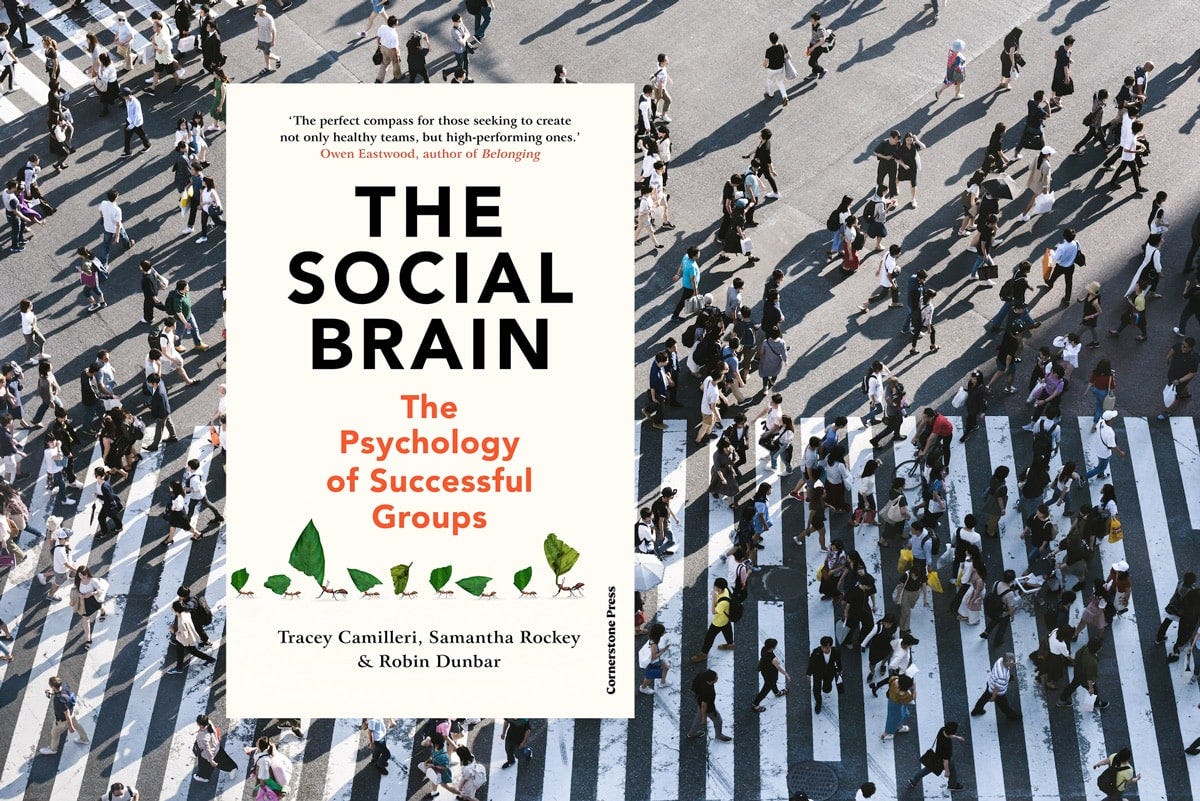
The Social Brain
Why Language Dies in Isolation and Thrives in Community

“Language is social. It’s made to connect.”
This single sentence is not just a motivational quote. It is a statement of biological and psychological fact. The human brain is not designed to acquire language in a vacuum. It is designed for interaction, negotiation, and shared attention.
When you learn a language alone for months, staring at apps and textbooks, the words become abstract, weightless, hollow. They exist in your notebook but not in your neural pathways for spontaneous communication. The motivation fades—not because you lack discipline, but because the language has no human face attached to it. This phenomenon is now well-documented in second language acquisition research.
The Science of Social Learning
Recent research confirms that social interaction is not just helpful for language learning—it may be essential. A 2025 review published in Nature’s npj Science of Learning examined theoretical frameworks and empirical studies demonstrating how social factors fundamentally influence second language (L2) learning . The authors argue that interaction shapes and boosts acquisition in ways that solitary study cannot replicate.
Why? Because language evolved for two bodies in a room, negotiating meaning, sharing stories, building trust. When you learn in isolation, you strip language of its primary function. You are practicing a dance without a partner.
A study published in English Teaching & Learning explored the factors that maintain learners’ “Directed Motivational Currents”—the intense, prolonged motivation that drives successful language acquisition . The findings revealed that motivation is sustained by tools mediated through social relations: the attention and care received through interactions with classmates, teachers, and community members. Learners’ motivation was shown to be influenced by community membership itself . In other words, belonging to a group of people who share your language journey creates a current that carries you forward when individual willpower falters.
This aligns perfectly with Self-Determination Theory (SDT), one of the most robust frameworks in educational psychology. Research applying SDT to language learners on platforms like Tandem and HelloTalk found that the satisfaction of three basic psychological needs—autonomy, competence, and relatedness—directly predicts motivation . Crucially, relatedness—the feeling of connection to others and a sense of belonging—was essential for sustaining motivation, particularly for learners who were more extrinsically driven . When learners feel connected to a community, they persist.
Why Community Changes Everything
The practical suggestions from the original post are not just tips—they are evidence-based interventions.
1. Find a language exchange partner
A 2025 study on peer feedback and social support in online learning demonstrated that both elements significantly improved motivation, task engagement, and language mastery . Learners who received peer feedback and social support showed statistically significant gains compared to control groups. The qualitative data revealed that social interactions in virtual environments were essential for maintaining motivation and engagement . A language exchange partner is not just practice—it is a motivational anchor.
2. Join an online community or forum
The same study emphasized the importance of community membership as a mediating factor in language learning . When you join a community, you are no longer an isolated learner. You become part of a social structure with shared goals, norms, and mutual support. This creates what researchers call a “community of inquiry,” where teaching presence, social presence, and cognitive presence interact to enhance motivation . A 2025 study found significant positive effects of these three dimensions on vocabulary learning motivation .
3. Book one session with a tutor
A tutor provides more than instruction. They provide scaffolding—a concept derived from Vygotsky’s Zone of Proximal Development (ZPD) . Research on learner-learner interactions shows that scaffolding in the right ZPD facilitates language development . When learners work collaboratively, they engage in “collective scaffolding,” building language together. A tutor, as a more expert other, can create the optimal conditions for this scaffolding, helping you reach levels you cannot achieve alone. Even 30 minutes creates a real human expectation—a deadline, a social commitment, a reason to prepare.
4. Post a single sentence on social media
This simple act breaks the wall between “learner” and “participant.” Research on classroom interaction in second language acquisition synthesizes findings from three theoretical perspectives—cognitive-interactionist, sociocultural, and language socialization—to demonstrate how learners establish their membership in the target language community through social interaction . Posting in your target language is a declaration of membership. It invites response, correction, and connection. It transforms you from a consumer of content into a producer of meaning.
The Deeper Truth: Motivation as Fire, Not Fuel
Motivation is not a fuel tank you deplete. It is a fire—and fire needs oxygen. Community is that oxygen.
Research on “Directed Motivational Currents” (DMCs) describes moments when motivation becomes a powerful, enduring force that carries learners toward their goals . These currents are not sustained by individual grit alone. They are sustained by tools mediated through social relations: the knowledge gained from books, the inspiration from motivational media, the attention and care received from others, and the sense of belonging to a community . Without this social oxygen, even the brightest flame suffocates.
A 2025 study on peer feedback in online learning concluded: “Integrating peer feedback and social support into online EFL instruction can significantly enhance learning outcomes. It underscores the value of fostering social interactions in virtual environments” .
Practical Steps to Reignite Your Motivation
If your motivation has withered, do not look for a better app or a new textbook. Look for a person.
This week: Join one language exchange platform. Send one message.
This month: Attend one online conversation group. Make one mistake in front of real humans.
Today: Post one sentence in your target language on social media. See what happens.
The research is clear: social interaction shapes and boosts second language learning . It is not optional. It is the engine.
Language without people is a corpse. Language with people is alive. Go find your people.
References
Karimi, M. N., & Parsamajd, Z. (2025). Factors Maintaining EFL Learners’ Directed Motivational Currents in Learning English: An Activity-Theory-Informed Multiple Case Study. English Teaching & Learning, 49(2), 361–387.
Iwashita, N., Dao, P., & Nguyen, M. X. N. C. (2025). Understanding Interaction in the Second Language Classroom Context. Multilingual Matters.
(2000). The Zone of Proximal Development (ZPD) and Scaffolding in the Learner-Learner Interactions in Second Language. KCI.
Rahim, N., & Xu, B. (2025). Peer feedback and social support in online learning: Examining motivation, task engagement, and language mastery through an activity theory perspective. ScienceDirect.
(2025). Effects of Community of Inquiry on EFL students’ vocabulary learning motivation in a blended learning environment. DOAJ.
Zappa, A., et al. (2025). Social interaction shapes and boosts second language learning: virtual reality can show us how. npj Science of Learning, 10(1), 90.
(2000). Second language learning in the zone of proximal development: A revolutionary experience. ScienceDirect.
Yin, L., & Fathi, J. (2025). Exploring the motivational dynamics of chinese learners on tandem and hellotalk: A self-determination theory perspective. ScienceDirect.